

Vehicle type, route and campaign length all matter in bus and Metrobüs advertising. Media Cortez assesses full wraps, rear panels and double-decker options against your target areas and budget.
PIN Drinks · Full Metrobüs wrap
The photograph above shows the brand name, product images and colourful wrap across the vehicle body.
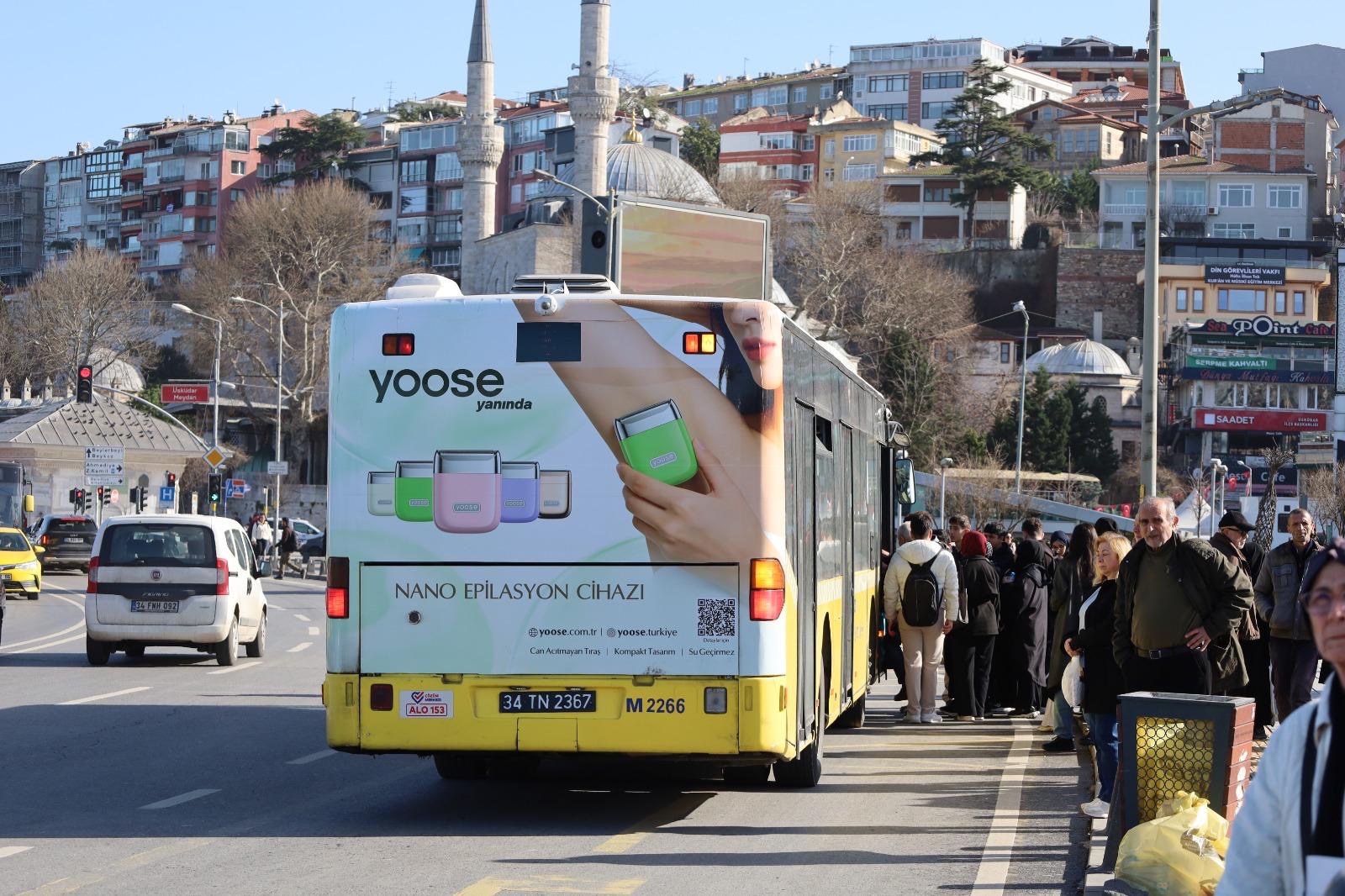
YOOSE · Bus rear Superback
The YOOSE nano hair-removal device campaign places product visuals and the brand message on the rear of the bus.
Compare vehicle formats
Full wraps and rear panels offer different surfaces and budgets. Metrobüs planning considers its transport route; double-deckers require artwork adapted to their different body shape. Compare target area, covered surfaces and duration as well as size, and check available vehicles before the proposal.
Superback rear panels
Superback uses the rear advertising surface. With less space than a full wrap, the brand name and one main message take priority. Vehicle count, operating area, duration and covered surface are assessed together; printing, installation and removal are specified separately.
Routes and duration
A local store-opening campaign and citywide awareness may need different distributions. Vehicle numbers and duration follow those goals. Do not assume a particular vehicle always serves the same route: operating conditions and the purchased scope must be clarified with the operator.
Costs, artwork and implementation
Vehicle type, surface, count, dates and duration affect media costs. Clarify artwork adaptation, printing, installation, removal and end-of-campaign work. Design must account for doors, windows and body joins using the selected vehicle’s template. Materials and installation follow operator requirements, with field checks and photographs within the agreed scope.
Start your proposal
Share your brand, goal, target cities or districts, start date and budget; mention vehicle preferences, existing artwork and intended duration. Availability is checked before buying and operations are defined.